The Range Rover Electric subs out sound for serious soul factor

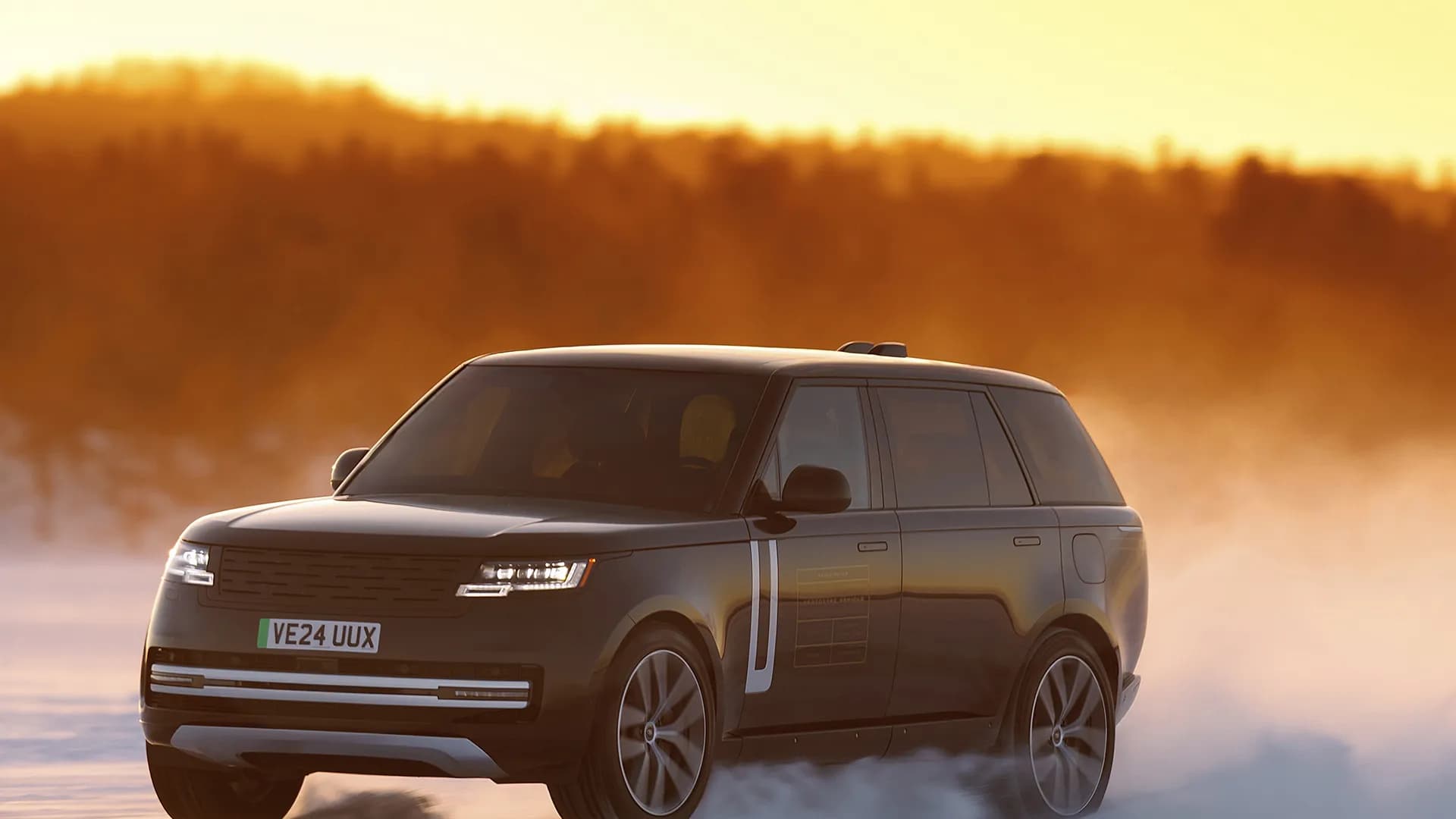
Unless you're a self-confessed petrolhead, electrification of cars is definitely the direction of travel – hence why two things: Range Rover Electric is coming soon but also Ferrari, Lamborghini and Porsche have cooled somewhat on the idea given EVs are not the answer for brands whose products remain tied to the sensation that only a combustion power unit can provide.
Range Rover though is a luxury goods unicorn, a symbol not just of status but also unassailably, undeniably cool without the fear of having a mechanic's knowledge. Indeed, no-one buys a Range Rover to rev the nuts off its engine or corner it on its door handles. It's more about the commanding driving position, the effort-free sense of superiority, and the ability to hermetically seal yourself off from the rest of the world. Going electric leans hard into these attributes, which is why the long-awaited electric version is as risky as it is highly anticipated.

“Our cars have a specific feel,” JLR’s director of product engineering, Thomas Müller, tells GQ. “and we’re going to remain precise and true to the genetics of a Range Rover. The EV will have a soul. It’s not a car that’s extremely direct or responsive, rather there’s what I would call a luxurious level of isolation. This is in everything, including the steering, the seats, how you sit in them, the pedal feel and the calibration of the controls.”
The tech story is very persuasive. The Range Rover BEV is powered by two permanently excited synchronous motors, one on each axle, with a silicon carbide inverter. They’re fed by a double stack 117 kWh battery pack and it uses an 800V architecture so it can support charging up to 350kW. Note that how fast you can charge and EV is just as important as how quickly you can travel in one. The total system power output is 542bhp, with 627lb ft of torque. Range wise, we're talking around 300 miles fully charged. And rather than sourcing the hardware from an existing supplier, JLR has gone the proprietary route.

“We could probably have brought the car to market a year earlier if we’d sourced the batteries externally,” a spokesman tells GQ, “but we couldn’t find any that fitted the brief.” That sense of superiority courses through this thing like blood flowing through veins.
Because there’s no mechanical link between the front and rear, the electric Range Rover instead uses an all-new Independent Driveline Distribution (IDD) system to manage torque flow between the axles. An Integrated Traction Management (ITM) system sends a signal to the main ECU within 50 milliseconds to manage grip at all four wheels. Amazingly, this is 100 times faster in terms of slip management than the combustion equivalent. A software-defined Range Rover is clearly a vehicle with a high IQ. Other breakthroughs include a system called Thermassist, which decides what temperature the battery ought to be by constantly evaluating more than 700 different parameters. It can recover heat from as low as -10°C, the aim being to improve efficiency, enhance interior comfort, and extend range.

Despite the Louis Vuitton-style luxury inside – mosaic marquetry and elegant fold-out tables are amongst the galaxy of options – full off-road capability remains a vital Range Rover attribute. Some rivals have gone for an e-motor on each wheel, which these guys insist only adds weight and complexity. So you can forget about being able to perform a tank turn in the Range Rover Electric. This isn’t a car that’s chasing cheap likes on Tik Tok.
Besides, a car as stunning to drive as this doesn’t need gimmicks. The BEV configuration actually brings some inherent advantages, including a lower centre of gravity, better weight distribution between the axles, and no change in mass depending on fuel load, means the dynamics are tuned with even greater precision. The BEV uses the same chassis modes as the regular car, so ‘Grass, gravel, snow’, ‘Dynamic’, and ‘Dynamic with everything off’. The new control systems are well integrated, ensuring that the car moves with the same effortless progression as the existing iterations. Much effort has gone into managing the way it pitches and rolls. In fact, it feels rather like a powerboat, lifting its nose slightly as you accelerate, but always imparting a serene sense of control.
Prices and final specs are yet to be fixed, but the conclusion is inescapable: the world’s most desirable car just got even better.