Why Le Mans 24 Hours is better than F1

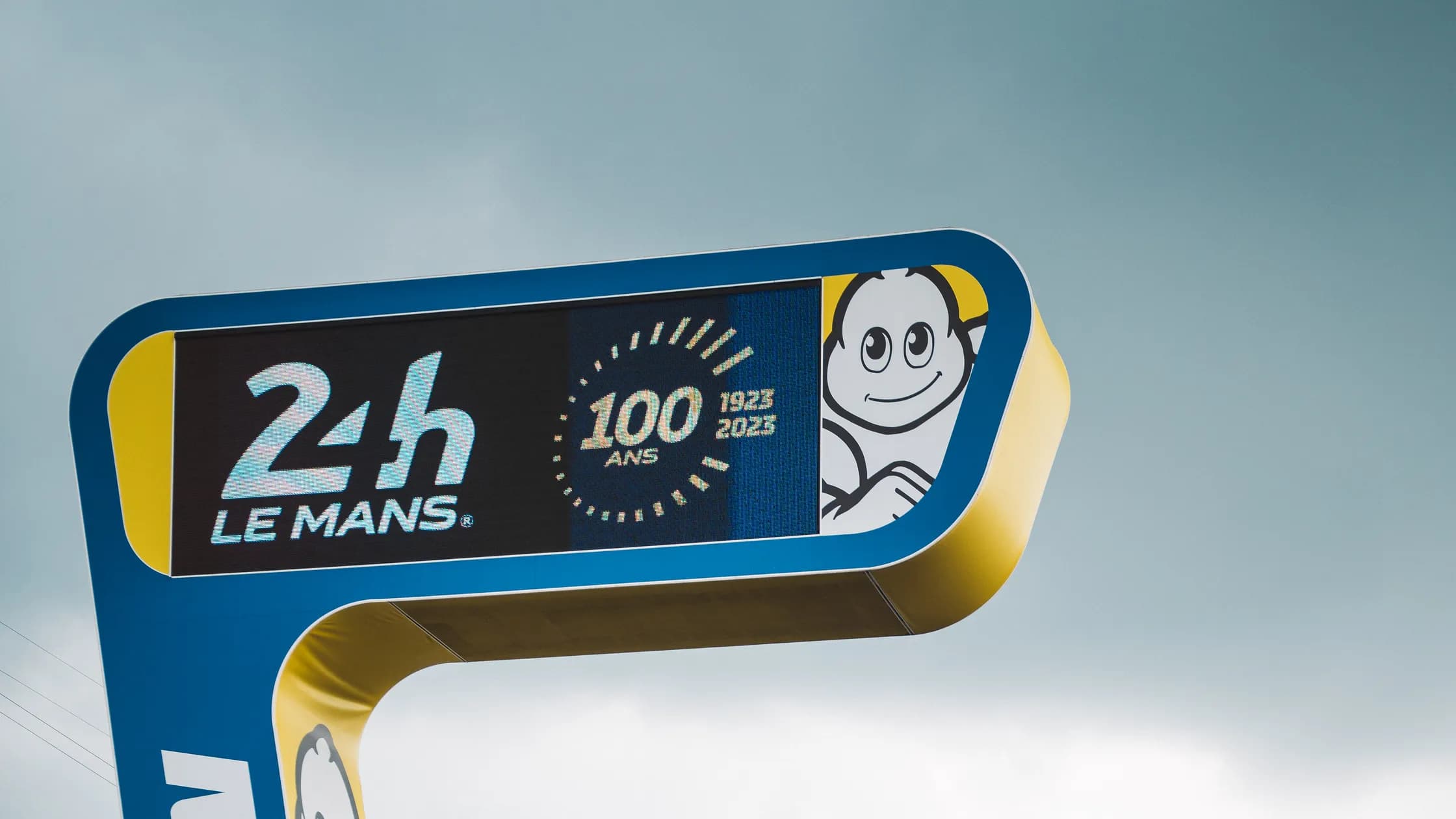
Cross the Channel Tunnel in Folkestone, descend through Northern France and the excitement quickly builds. The Le Mans 24 Hours race doesn’t start until Saturday, but the long Thursday drive sees numerous Porsches, Ferraris and Aston Martins line the same cross country drive to the Circuit de la Sarthe. Thousands make the pilgrimage every year in their road going versions of the race cars that lap Le Mans for the full 24 hours.

Luca Donth
The famous race celebrated its centenary this year, with all 350,000 tickets selling out immediately after going on sale. Arrive at the track and the festival atmosphere sweeps you away, with the thudding bass of tent speakers interspersed with the cackle of exhaust overrun. Sausages sizzle, beer is swilled, and a number of the world’s most talented drivers battle for supremacy in the ultimate test of man and metal.
There’s no doubt this is a special place, with 100 years of heritage to back it up. There were the early days of the Bentley Boys in the ‘20s, the epic battles of Ford and Ferrari in the ‘60s, the glory days of the ‘70s, and the dominance of Audi in the ‘00s. 2023 marks a new era with the introduction of the hypercar class and the return of the manufacturer race, with Ferrari, Peugeot, Cadillac and Porsche entering the fold alongside Toyota.

A few days before his 44th birthday, Audi factory driver Allan McNish announced that he would not continue his active career in the 2014 season.AUDI AG
What makes Le Mans 24 Hours so unique though is the way these state of the art hypercars made by the world’s biggest manufacturers share the track with privateers; amateur teams who’ve entered perhaps with the aim of finishing rather than in-class domination. It gives the whole affair a more ‘human’, down to earth feel when compared to the unattainable glitz and glamour of like Formula 1. This is something Allan McNish knows well. The Scotsman has raced in F1 and won Le Mans three times, first with Porsche in ’98 and then with Audi in ’08 and ’13.
“I’ve started likening Le Mans a bit to Mount Everest,” he says. “It's the same mountain for everybody – trying to complete the 24 hours. For us as a factory driver it was to win, nothing else mattered, but for some of the teams it is to finish, that’s their Mount Everest. That does bring in a little bit more of the human factor. It's not just a corporate entity. It's not just a business. It's not the big F1 spectacle in that respect. It's a spectacle in a different way. And in all honesty, that's one of its charms.”
Le Mans was immortalised on the silver screen in 1971. The eponymous film was actor Steve McQueen’s passion project. After finishing third at the 1970 12 Hours of Sebring, he signed up to race at Le Mans until his insurers banned him from doing so. That hasn’t stopped other, non endurance racers from following in his footsteps over the years, something McNish thinks only benefits proceedings. “This year you've got people like Patrick Dempsey and Michael Fassbender down there as two examples. We've had Colin McRae and Sebastien Loeb race here in the past. There've been so many people from different parts of life that have actually competed here because they could. And they couldn’t have done that anywhere else. It still brings that mythical charm that it did in the film in the 70s.”

Luca Donth
I meet McNish in the Michelin hospitality building overlooking the final chicane, and naturally the talk turns to rubber. “With Michelin, they've been part of my life and career. You know, since I won the first Le Mans in ‘98 all the way through my Formula One and sportscar career, every single race that I won was on Michelin.” So, how do the drivers manage the tyres over the brutal 24 hour race? “Tyre management is an F1 thing”, he says. “Here you lean on the tyre, you don't have to conserve and baby it as you do in F1. So basically, it's a flat out attack.” Back in the garage, things are more nuanced. “You're constantly working with your tyre manufacturer, and also your engineer, who understands the difference between you and your teammate. I would go out and qualify and he would make subtle adjustments to the pressures just for my driving style and what I needed.”
For McNish, whatever he and his team did clearly worked. Not many racing drivers win at Le Mans, let alone three times in two different eras. What’s his secret? “Ultimately, it's all about the competition. That's what pushes your boundaries, makes you go quicker. My dad told me in about 1982, If you're not quicker today than you were yesterday, somebody's gonna beat you. It's a simple fact of life.”